Interior Design for Rental Apartments: What Investors Should Know
· 7 min read · Polski · ES · Українська
Interior design for a rental apartment should aim at durability, easy cleaning, broad appeal and a layout that works for the target tenant. Choose hard wearing floors and washable walls, neutral warm colours, robust furniture and good lighting, and add a few memorable details that make photographs and viewings convincing.
Key takeaways
- Design for the tenant you want: a young professional, a family, a short stay guest.
- Durability and easy maintenance protect your income more than decoration.
- Neutral, warm colours and good light make apartments easier to let and to sell later.
- A few well chosen details create a memorable first impression without raising upkeep.
- Check local rules and the lease terms before you plan the furnishing and the finish.
Why does interior design matter for a rental apartment?
For an investor, the interior is part of the financial plan. A well designed apartment is easier to show, easier to let to the right tenant and more resistant to wear. A poorly planned one can mean repairs, empty periods and complaints. At the same time, over investing in luxury can reduce the benefit if the market will not support it. The task is to find the right level of quality for the location and the tenant.
Our article on investing in Warsaw real estate as a European gives context on the market. Renovation and maintenance costs also affect the net result of a rental, so plan them from the start.
Who is your tenant and what do they need?
Different tenants value different things.
| Tenant | What they value | Design response |
|---|---|---|
| Young professional | Location, good light, a work corner, fast internet | Compact layout, desk space, calm palette |
| Couple | Comfortable bedroom, a pleasant kitchen, storage | Good wardrobe, equipped kitchen, warm lighting |
| Family | Space, storage, safety, durable surfaces | Hard wearing floors, built in storage, separate sleeping areas |
| Expat or corporate tenant | Furnished, ready to move in, quality | Complete furnishing, practical decor, clear inventory |
| Short stay guest | Comfort, cleanliness, photogenic spaces | Durable textiles, strong first impression, simple controls |
Choose the tenant first, then design for them. If you are still deciding where to buy, our guide to Warsaw neighbourhoods for investors will help.
Which finishes survive rental use?
Rental apartments face more wear than a home lived in by the owner. Choose finishes that can take it.
- Floors. Porcelain tile, quality engineered oak or high pressure laminate with a high wear rating, rather than soft wood or thin vinyl.
- Walls. Washable matte paint in warm light colours, and a durable skirting.
- Kitchen. Hard wearing worktops, robust hinges and drawers, easy to clean fronts.
- Bathroom. Large format tiles, quality taps, good ventilation and sealed joints.
- Joinery. Simple, strong storage with solid hardware.
- Windows. Curtains or blinds that are easy to replace.
Our kitchen design guide covers worktops and fronts.
How do you choose a style for rentals?
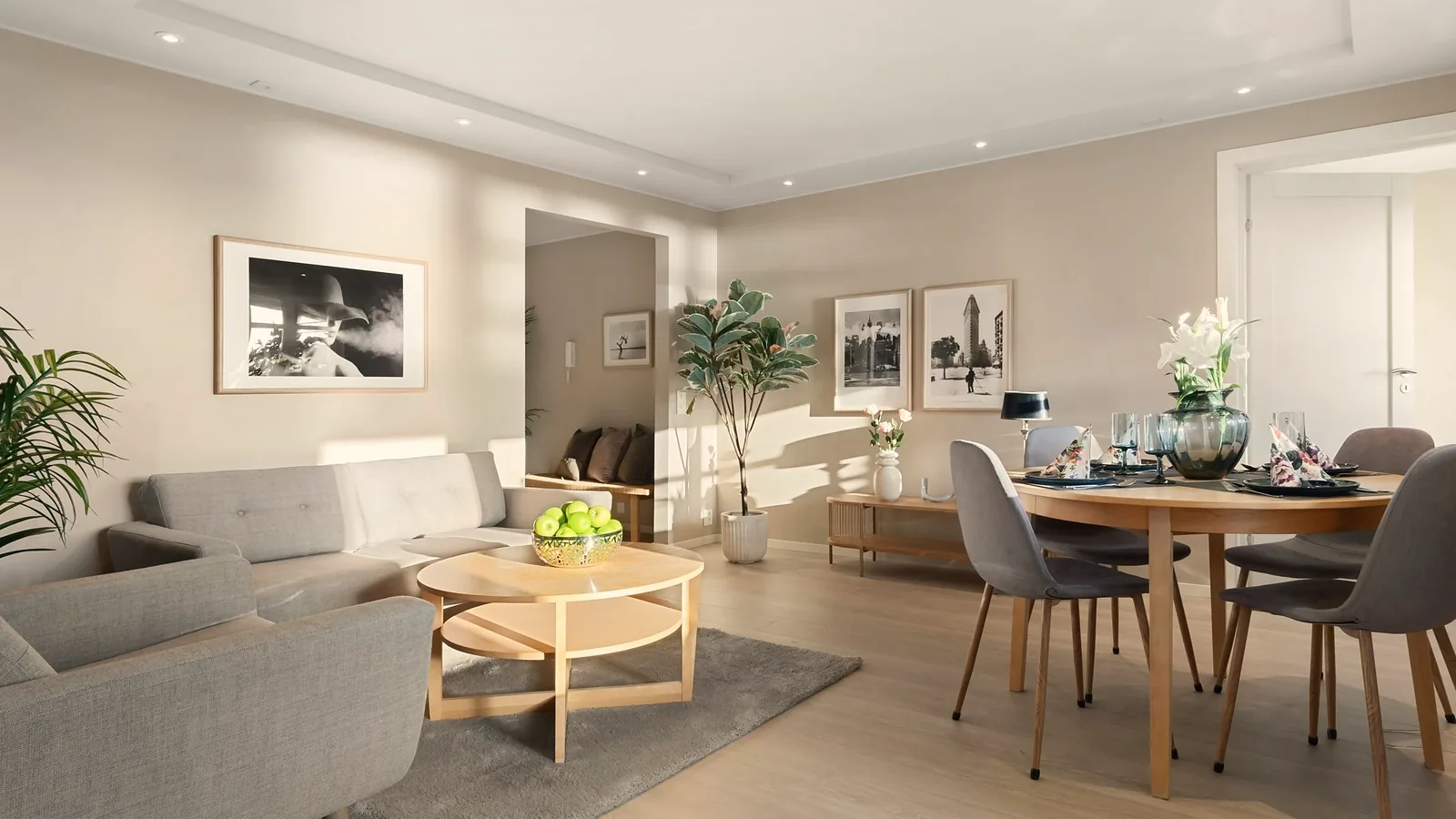
A broad, calm style works best. Warm white walls, light or medium wood, and neutral textiles are safe, while a few strong details keep the apartment from feeling generic. For example, a patterned tile in the entrance, a sculptural lamp or a bold artwork can create identity. Styles such as Scandinavian or contemporary Spanish fit many tenants. Avoid trends that date quickly or strong colours on large surfaces.
Should you furnish the apartment?
It depends on the tenant and the market. A furnished apartment can attract expats, students and short term tenants, and may allow different lease arrangements. An unfurnished apartment suits families and long term tenants who bring their own things. If you furnish, choose pieces that are:
- Durable. Solid frames, washable covers and quality mattresses.
- Simple. Easy to repair or replace.
- Modular. Items that can be rearranged.
- Complete. A bed, wardrobe, table and chairs, sofa, lighting and kitchen basics.
- Documented. Keep an inventory with photographs.
How do you plan a small rental layout?
Small apartments are common in the rental market. Use the same principles as in our guide to small apartment interior design: clear zones, built in storage, a bed that does not dominate, and a table that serves both dining and work. Add a good wardrobe, a place for luggage and a kitchen that can handle daily use.
What about lighting and photographs?
Good lighting helps both the tenant and the listing. Use warm light, several fittings at different heights and dimmers where possible. Make sure rooms are bright in the daytime with sheer curtains. For photographs, place furniture to show the space, keep surfaces clear and add small touches such as a plant or a lamp. Our lighting guide explains the layers.
How much should you spend?
There is no single answer. Spend where it protects the asset: installations, waterproofing, floors, kitchen and bathroom. Spend less on decorative items that can be replaced. Compare the cost of improvements with the rent your tenants can realistically pay, and keep a reserve for repairs. A free valuation can help you understand the property’s potential before you decide.
How do you handle maintenance and turnover?
A rental is a long term relationship with a building. Plan for maintenance: keep a list of paint colours, tile references and fittings, so that repairs match. Choose finishes that can be touched up, such as matte paint and wood that can be refinished. Between tenants, schedule time for cleaning, small repairs, and an inspection of the walls, floor, bathroom and appliances. Documenting the condition with dated photographs at handover protects both sides. If you manage the property from abroad, a trusted local contact and a clear schedule of inspections are essential, and our guide to working with a design studio from abroad describes similar principles for remote projects.
How does a rental differ from a holiday let?
A long term rental is judged on durability and practicality, while a holiday let is also judged on atmosphere and photographs. Holiday guests expect a polished, hotel like room, with comfortable beds, good blackout curtains, strong wifi and well stocked kitchens. Cleaning cycles are more frequent, so surfaces and textiles must withstand regular washing. Local rules for short stays can be strict, so check them before you plan the design.
What legal and practical points should you check?
- The lease and local rules. Know your obligations as a landlord.
- Fire, safety and electrical standards. Make sure installations are safe and documented.
- Housing community rules. Check restrictions on renovation work and short stays.
- Tax and registration. Confirm requirements with an adviser.
- Insurance. Consider cover for the building and contents.
Rules differ between Poland and Spain and they change, so confirm each point with a lawyer or a tax adviser. For Spain, see also our overview of buying property in Spain as a Polish investor.
What mistakes should you avoid?
- Designing for yourself. You are not the tenant.
- Cheap materials in high wear areas. They cost more in repairs.
- Too many personal items. They make viewings less neutral.
- Poor ventilation and damp control. Mould damages the property.
- Ignoring noise. Rugs and good doors improve comfort.
- No inventory. Keep a list and photographs of the furnishings.
What is a sensible order of decisions?
Start with the target tenant and the layout. Then fix the installations and the durable surfaces, choose the kitchen and bathroom, and only then select furniture and decor. Each step narrows the next one, and the cost of changing your mind grows with every stage. Write down the choices and the suppliers, so that repairs and replacements later are simple and consistent across the property.
Frequently asked questions
Should a rental apartment be furnished?
It depends on the tenant group. Furnished flats suit expats and short stays, while unfurnished flats suit families and long term tenants. Check demand in your area.
Which floors are best for rentals?
Porcelain tile and quality engineered oak or hard wearing laminate resist wear well. Avoid soft or thin finishes.
Is it worth using a designer for a rental?
For many investors, yes, because a designer plans the layout, materials and budget as a whole and can help avoid costly mistakes.
Can good design increase the value of an apartment?
It can improve appeal and speed of letting, and it can support the price when you sell. The effect depends on the market and the quality of the work, and no result is certain.
How do I choose between modern and classic styles?
Choose a broad, calm style that appeals to your target tenants. Warm contemporary interiors with a few classic details suit most markets.
How Kaster Group can help
If you plan a rental or investment apartment in Warsaw, Gdańsk or Spain, we can talk with you about the layout, finishes and budget level.
Kaster Group offers interior design and luxury renovation in Warsaw and Gdańsk, as well as in Madrid, Marbella and Tenerife, from the first sketch to the final styling.
The Spanish group behind Kaster has more than 10 years of experience in the real estate sector in Spain.
To talk about your project, write to info@kastergroup.eu or visit the Kaster Group studio page.
If you also want to know what your apartment is worth before you renovate, furnish or sell, you can request a free valuation.
This article is general information, not legal or tax advice. Rules change; always confirm your situation with a notary, lawyer or tax adviser.