Hiring a Renovation Contractor: A Checklist for Owners
· 7 min read · Polski · ES · Українська
Hire a renovation contractor by comparing written quotes for the same scope, checking references and previous work, confirming insurance and responsibilities, and signing a contract with a schedule, payment stages and acceptance rules. Avoid paying large sums in advance, and keep every change in writing.
Key takeaways
- Give every contractor the same drawings and specification, so quotes can be compared.
- Visit finished projects and speak to previous clients before you decide.
- A written contract should define scope, schedule, payment stages, changes, defects and warranties.
- Tie payments to completed stages, not to the calendar alone.
- Low prices can hide missing items, so compare what is included before you compare totals.
What should you prepare before you ask for quotes?
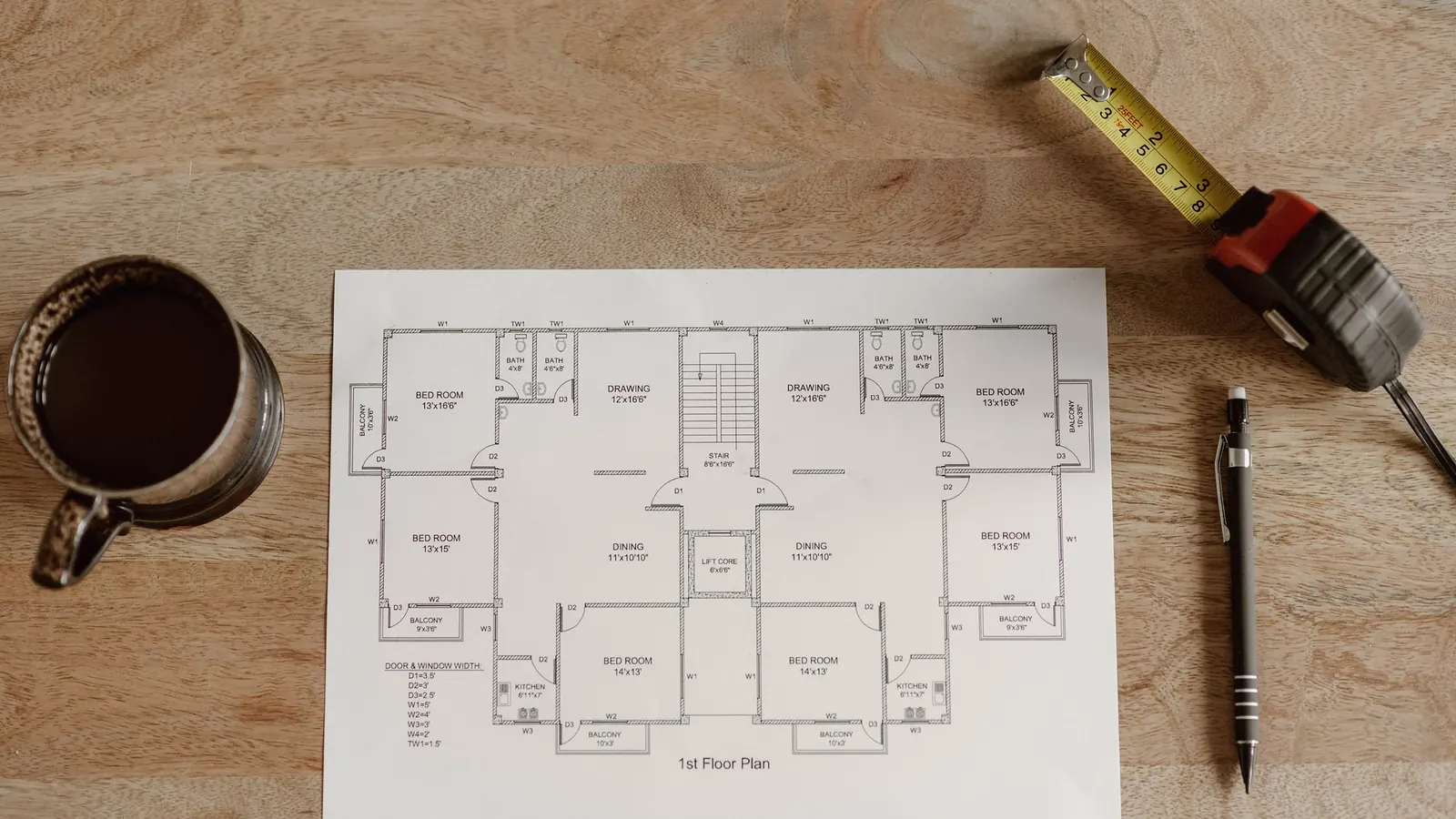
A contractor can only quote precisely when the scope is clear. Prepare a brief, a budget and, ideally, technical drawings and a specification of materials. If the scope is vague, quotes will differ widely and will be hard to compare. Our guide to planning an apartment renovation explains which decisions to make first, and our article on the order of works in an apartment shows the sequence a contractor should follow.
Prepare the following:
- Drawings of the layout, electrics, plumbing, ceilings and joinery.
- A list of materials and fixtures that you will supply and those that the contractor will supply.
- The building rules, including working hours and any approvals needed.
- Your desired start, finish and key dates, such as a move in date.
How do you find and shortlist contractors?
Ask for recommendations from friends, architects, designers and neighbours who have recently renovated. Look at finished work, not only photographs. Check that the company is registered and has the necessary qualifications for gas, electrical or structural works where these apply. Shortlist three or so contractors that work on projects of similar size and style, and ask each for a visit and a written quote.
What should you ask during the first meeting?
- Which projects like mine have you completed recently, and can I visit one?
- Who will manage the site every day, and who will do the work: your own team or subcontractors?
- Which trades do you perform yourself and which do you hire?
- How do you protect common areas, handle waste and communicate with the building?
- What is your process for changes, delays and defects?
- What insurance do you have for damage to the property and third parties?
- What warranty do you give on workmanship, and what does it cover?
Listen for clear, practical answers. A professional contractor will ask you many questions about the apartment and the plan.
How do you compare quotes?
Compare quotes line by line, not only by the total. Use a simple table:
| Item | What to check |
|---|---|
| Scope | Are all rooms and trades included? Are demolition and waste removal listed? |
| Materials | Who supplies them and to which specification? Are brands and quality named? |
| Allowances | Are there allowances for items not yet chosen, such as tiles or fixtures? |
| Schedule | Is there a start date, a finish date and key milestones? |
| Payments | Are payments tied to stages of work? |
| Exclusions | What is not included: permits, design, cleaning, joinery, appliances? |
| Warranty | How long and what does it cover? |
| Changes | How are changes priced and approved? |
A very low quote may omit work or use cheaper materials, which are later added as extras. A very high quote may include a large reserve or a high management fee. Ask each contractor to explain differences, and insist on a clear breakdown. Our guide to renovation budgets without surprises explains how to compare and control costs.
How do you check references?
Ask for contacts of recent clients and call them. Useful questions are: Did the contractor keep to the schedule? Were costs as agreed? How were problems handled? Was the site clean and well managed? Would you hire them again? If possible, visit a finished or ongoing project, and look at details such as corners, edges, tiling and paint lines. These small details show the quality of a team.
What should be in the contract?
A written contract protects both sides. Ask a lawyer to review it, particularly for larger projects. It should usually include:
- Parties and address, with full legal names.
- Scope of works, with drawings and specification attached.
- Materials and who supplies them, with brands or equivalent quality.
- Price and payment stages, linked to completed work.
- Schedule, with start date, milestones and completion date.
- Changes, including how they are priced, approved and recorded.
- Site rules, including working hours, cleaning, protection and waste.
- Acceptance, how and when completed work is inspected and signed off.
- Defects and warranty, how defects are reported and corrected, and for how long.
- Delay and termination terms, and responsibilities for damage.
- Insurance, and who is responsible for permits and approvals.
This article is general information and not legal advice. Local law and practice affect what is required, so ask a qualified professional about your contract.
How should payments be structured?
Avoid large advance payments. A common approach is a modest deposit to start, then payments at agreed stages, such as completion of demolition, rough installations, plastering, tiling, flooring and final handover. Keep a final part of the payment until defects are fixed. Record each payment with a receipt, and match invoices to the contract. Do not pay in cash without a receipt. Payments tied to stages also make it easier to see if the project is on track.
How do you manage the project once it starts?
- Meet weekly on site to review progress, decisions and next steps.
- Keep a log of instructions and changes, and confirm them by message or email.
- Take photographs before surfaces are covered, and keep them in a folder.
- Inspect key stages such as installations, waterproofing and levels before they are closed.
- Make decisions early, because late choices cause delays.
- Keep a reserve for surprises, particularly in older buildings.
What are the warning signs?
Be careful if a contractor:
- Refuses to provide a written quote or contract.
- Asks for a large advance payment or cash only.
- Cannot show previous work or references.
- Gives vague answers about who will be on site.
- Offers a price far below the others without explaining the difference.
- Pressures you to decide quickly.
- Does not mention permits, insurance or building rules.
Should you hire one contractor or several trades?
A general contractor coordinates the trades, takes responsibility for the schedule and quality, and gives you one point of contact. This costs a management fee but saves you time and reduces the risk of gaps between trades. Hiring trades separately can be cheaper but requires you to coordinate everything and resolve disputes about responsibility. For complex projects, a designer or project manager can coordinate trades on your behalf. Our overview of turnkey apartment finishing in Warsaw explains the one team approach.
Frequently asked questions
How many quotes should I get?
Usually three is a good number, provided each contractor receives the same drawings and specification. More quotes rarely add clarity and cost you time.
Is the lowest quote the best choice?
Not necessarily. A low price may exclude items, use lower quality materials or leave room for extras later. Compare the scope and specification, check references and then decide on value.
How much should I pay in advance?
Keep the advance modest and link later payments to completed stages of work. Ask for receipts, match payments to the contract and keep a final part until defects are fixed.
How Kaster Group can help
If you would like help preparing drawings, comparing quotes or coordinating the works under one team, we can support you from design to handover.
Kaster Group offers interior design and luxury renovation in Warsaw and Gdańsk, as well as in Madrid, Marbella and Tenerife, from the first sketch to the final styling.
The Spanish group behind Kaster has more than 10 years of experience in the real estate sector in Spain.
To talk about your project, write to info@kastergroup.eu or visit the Kaster Group studio page.
This article is general information, not legal or tax advice. Rules change; always confirm your situation with a notary, lawyer or tax adviser.