What Is Spanish Interior Design? Style, Materials and Principles
· 7 min read · Polski · ES · Українська
Spanish interior design is a way of arranging homes that was shaped by sun, heat and a social way of living. Typical features are thick plastered walls, cool tiled floors, natural materials such as lime, terracotta, wood and iron, shaded windows and rooms made for long meals. It differs by region, and its principles travel well.
Key takeaways
- Spanish interiors start from climate: light is controlled, rooms stay cool and air moves through the home.
- The materials are honest and local: lime plaster, terracotta, ceramic tile, stone, wood and wrought iron.
- Colour comes in doses, usually from tiles, textiles, art and plants rather than from every wall.
- Spain has several regional styles, so there is no single “Spanish look”.
- The principles can be adapted to colder countries, including Poland, if light and warmth are planned with care.
What is Spanish interior design?
Spanish interior design is the set of habits, materials and layouts that shaped homes in Spain over centuries and that interior designers still draw on today. It is not one style. It is a family of regional styles with common roots: a hot and bright climate, strong craft traditions in ceramics, plaster, wood and metal, and a home life centred on the table and the courtyard or terrace.
The word that explains a lot is sobremesa, the time people stay at the table after a meal. Many Spanish homes are planned so that this time is comfortable: a generous dining area, a kitchen connected to the living space, soft light in the evening and a terrace or balcony nearby.
Which principles define a Spanish interior?
Designers who work with Spanish interiors usually return to the same short list of principles.
- Control the sun. Windows are placed and shaded with care. Shutters, awnings, deep reveals and curtains reduce glare and heat while letting in a soft, indirect light.
- Keep rooms cool. Thick walls, stone or tile floors and cross ventilation keep the temperature pleasant without relying only on machines.
- Use materials that age well. Lime plaster, terracotta, ceramic, stone, solid wood and iron look better with use and are easy to repair.
- Let craft show. A hand painted tile, a forged railing or a carved door is allowed to be the decoration.
- Add colour in doses. Walls are often white or warm neutral, and colour arrives through tiles, ceramics, textiles, art and plants.
- Connect inside and outside. Courtyards, terraces and balconies work as extra rooms.
- Gather over time. Furniture and objects collected slowly create a lived in feeling that a single shopping trip cannot copy.
What materials are typical?
Materials carry most of the identity of a Spanish interior. The table below lists the ones you will meet most often and where they work well.
| Material | What it is | Where it works |
|---|---|---|
| Lime plaster and lime wash | A breathable mineral finish that gives soft, slightly uneven white and warm tones | Walls and ceilings, in dry rooms and in many hallways |
| Terracotta (barro cocido) | Fired clay tile with a warm, earthy colour | Floors, terraces, kitchens |
| Azulejos | Glazed ceramic tiles, plain or patterned | Kitchens, bathrooms, stairs, courtyard walls |
| Hydraulic tiles (baldosa hidráulica) | Patterned cement tiles, closely linked with Catalonia | Floors in hallways, living rooms and kitchens |
| Stone and marble | Natural stone in warm or pale tones | Floors, worktops, window sills, fireplaces |
| Wood | Oak, walnut, chestnut and pine, often with visible grain | Beams, doors, furniture, shutters |
| Wrought iron (forja) | Hand forged or welded dark metal | Railings, window grilles, lamps, bed frames |
| Esparto, rattan and wicker | Natural plant fibres | Lampshades, baskets, chairs, rugs |
How does Spanish style differ by region?
Spain is large and varied, and the interiors reflect it. A short map helps you choose references that match your taste and your building.
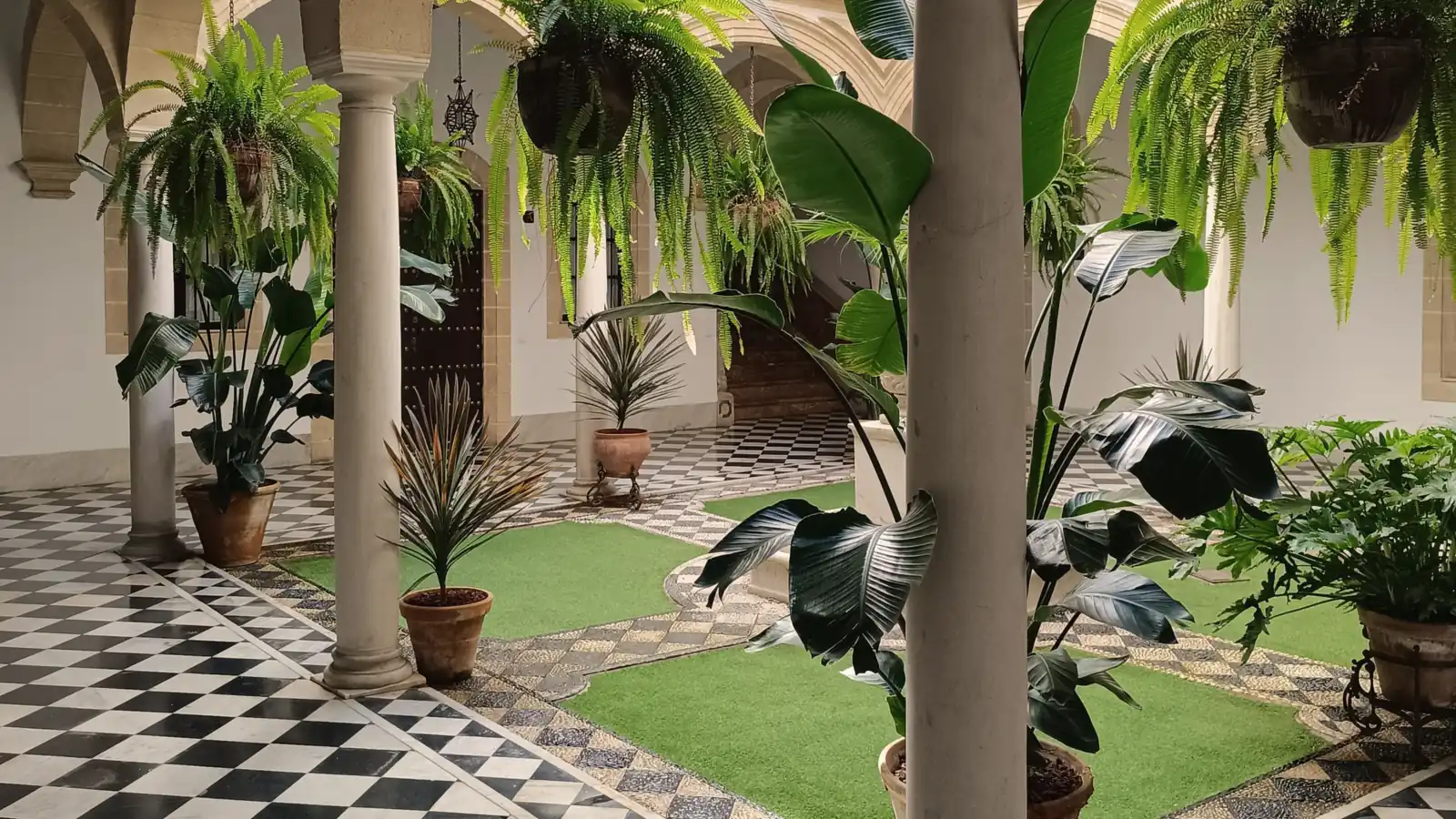
- Andalusia is known for patios, whitewashed walls, decorated tiles, arches and a Moorish heritage that influences ornament and the use of water and shade.
- Catalonia is associated with modernisme in Barcelona, hydraulic floors, Catalan vaults in brick and generous balconies.
- Castile, including Madrid, has a tradition of stone, brick and dark wood, tall rooms in older buildings, parquet and a more formal, urban feeling.
- The Valencian region is closely linked with ceramics and furniture making, and the coastal light supports pale, airy rooms.
- The Basque Country and Galicia lean on Atlantic stone, timber and a cooler palette.
- The Balearic and Canary Islands use white lime, local stone, wood and light, often with a simple, low maintenance approach to the sea climate.
For homes on the coast, see our articles on villa interior design in Marbella and renovating a holiday home in Tenerife. If you are working with a studio, knowing which of these regions speaks to you gives the first conversation a concrete direction. You can read how this applies to a major city in our guide to luxury renovation in Madrid.
What does contemporary Spanish design look like?
Today many Spanish designers combine the traditional palette with calmer, more restrained forms. Typical elements are warm minimalism, plaster or microcement walls, built in joinery that hides storage, large windows with good shading, natural stone and discreet, layered lighting. The influence of craft remains visible in a ceramic detail, a hand made lamp or a solid wood table.
Can Spanish style work in a colder country?
Yes, with adaptation. Spanish homes are designed to stay cool, and a home in Poland also has to stay warm for a long season with little daylight. The solution is not to copy materials blindly, but to keep the logic: honest materials, controlled light, a table at the heart of the home and colour in small doses. Warm light, textiles, wood and floors that are pleasant underfoot are what make the translation work.
How do you start a Spanish inspired interior?
- Choose a region or mood as a reference, not a copy. Collect a few images and note what you like in each: the light, the tiles, the furniture.
- Fix the architecture first. Layout, windows, floors and walls give more character than accessories.
- Pick two or three main materials. For example lime plaster, oak and a hand made tile.
- Plan the light in layers so that evenings are warm and mornings are bright.
- Add craft pieces last: a ceramic, a forged detail or a woven lamp.
- Keep space around objects. Spanish interiors are rarely crowded, and calm walls make a good tile or painting stand out.
Why does Spanish design feel timeless?
Spanish interiors rely on things that do not go out of fashion: proportion, natural material, good light and objects with a story. A lime wall or a terracotta floor was chosen centuries ago because it works in the climate, not because it was trendy, and that practical origin is why it still looks right today. When you plan a modern interior, ask of every choice whether it solves a real need. If it does, it will probably age well. You can see the same attitude in our work on interior design in Warsaw, where proportion and materials come before decoration.
Common mistakes to avoid
- Using decorative tiles everywhere. One focal surface is stronger than five.
- Choosing cold white paint for a room with little light. Warm whites and lime tones work better.
- Imitating a villa in a small city apartment. Scale the references to the building.
- Ignoring maintenance. Terracotta and lime need the right sealing and care.
- Treating style as a shopping list. A coherent plan beats a set of “Spanish” objects.
Frequently asked questions
What is the difference between Spanish and Mediterranean interior design?
Mediterranean is a wider term that covers coastal homes in Spain, Italy, Greece, France and beyond. Spanish design is one branch, with its own tile traditions, ironwork, regional building styles and a courtyard and terrace culture. The two share a love of light and natural materials.
Is Spanish interior design always colourful?
No. Many Spanish interiors are calm and neutral, with white or warm walls. Colour usually comes from tiles, ceramics, textiles, art and plants, so the base stays quiet and the details carry personality.
Can I use Spanish style in a small apartment?
Yes. Choose a limited palette, one standout surface such as a patterned floor or kitchen splashback, simple joinery and warm lighting. Small spaces benefit from the clarity of the style.
Do I need a Spanish designer to get this look?
Not necessarily, but a designer who knows the materials and the craft suppliers will save you time and avoid imitation.
How Kaster Group can help
If you would like a Spanish influenced interior in Poland or in Spain, we can discuss your apartment, the light and the materials.
Kaster Group offers interior design and luxury renovation in Warsaw and Gdańsk, as well as in Madrid, Marbella and Tenerife, from the first sketch to the final styling.
The Spanish group behind Kaster has more than 10 years of experience in the real estate sector in Spain.
To talk about your project, write to info@kastergroup.eu or visit the Kaster Group studio page.
This article is general information, not legal or tax advice. Rules change; always confirm your situation with a notary, lawyer or tax adviser.