Japandi Interior Design: A Calm Blend of Japan and Scandinavia
· 6 min read · Polski · ES · Українська
Japandi is a hybrid interior style that blends Japanese minimalism with Scandinavian comfort. It uses natural materials, low furniture, muted earth tones, handmade objects and plenty of empty space. The goal is a calm, balanced and functional home where every object has a purpose.
Key takeaways
- Japandi joins two traditions that both value simplicity, nature and craft.
- The palette is quiet: warm neutrals, soft greys, clay, moss and charcoal.
- Materials are natural: wood, paper, stone, ceramic, linen and wool.
- Furniture is low, simple and well made, and the space is left to breathe.
- It works well in small apartments, but needs careful storage planning.
What is Japandi interior design?
The word Japandi combines Japan and Scandinavia. Both traditions favour simple forms, natural materials and a calm atmosphere, though they arrive there differently. Japanese design brings ideas such as wabi sabi, which finds beauty in imperfection and age, and a respect for empty space. Scandinavian design brings warmth, light and comfort for cold climates. Together they make a home that is quiet but not cold.
How is Japandi different from Scandinavian style?
| Feature | Scandinavian | Japandi |
|---|---|---|
| Mood | Bright, cosy, friendly | Calm, grounded, contemplative |
| Palette | White, grey, pale wood | Warm neutrals, clay, moss, charcoal, darker wood |
| Furniture | Light, rounded, functional | Low, structured, handcrafted |
| Decor | Textiles, candles, art | Few objects, ceramics, branches, paper |
| Space | Open and cosy | Open with deliberate empty areas |
For a deeper look at the Nordic side, read our guide to Scandinavian interior design.
Which materials and colours suit Japandi?
- Wood. Oak, ash or walnut in matte oiled finishes, and sometimes charred or dark wood for contrast.
- Natural stone and ceramic. Honed stone, handmade ceramics and plain tiles.
- Paper and rice paper. Lamp shades and screens that soften light.
- Linen, cotton, wool. In earth tones, with visible weave.
- Plaster and lime. Soft, matte walls with a little variation. See our overview of interior materials for options.
- Plants and branches. A single branch in a vase or a sculptural plant.
Colours are low in saturation: sand, stone, olive, moss, soft black and warm white.
How do you plan a Japandi room step by step?
- Declutter first. Decide what you truly use and love.
- Choose the palette. Three or four related colours, mostly warm neutrals.
- Select the main pieces. A low sofa, a solid table, simple chairs, a bed with a low frame.
- Plan storage. Closed cabinets, built in wardrobes and a place for everything.
- Add texture. Wool, linen, ceramic and wood in different finishes.
- Control the light. Use soft lighting, paper lamps and natural light. Our article on lighting design at home explains how to build layers.
- Add a few objects. One piece of art, one vase, one plant. Leave space around them.
Does Japandi work in a small apartment?
Yes, because it values space and order. Use light and warm colours on walls, mount lights on walls to free surfaces, choose furniture with slim legs so that the floor is visible, and use fitted storage.
What does a Japandi bedroom or living room look like?
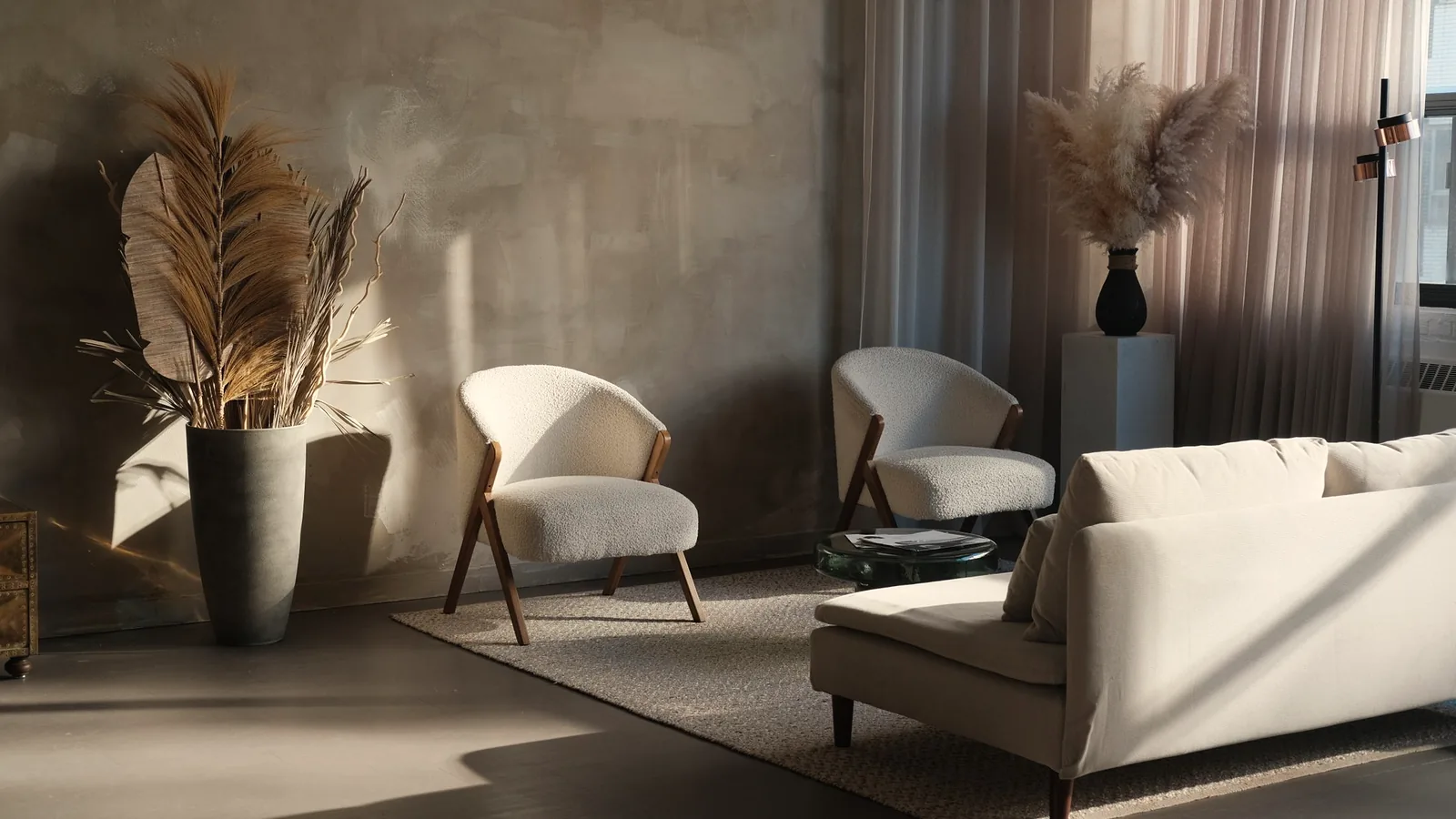
In a bedroom, picture a low bed in solid wood, natural linen bedding in sand or grey, a paper lamp on a wooden stool, a single piece of art and a wardrobe built into the wall so that the room looks clear. In a living room, think of a low sofa in a natural fabric, a wooden coffee table, a woven rug, a floor lamp with a paper shade and a ceramic bowl or a branch as the only decoration. The rooms are not empty. They are edited, and each object has room to be seen.
How do you add craft and personality?
Japandi depends on objects made by hand. A ceramic cup with a slightly irregular glaze, a woven basket, a wooden bench with visible joints or a linen cushion with a natural texture adds character that mass produced items cannot. Choose fewer items, and choose them carefully. If you can, buy from makers or craft studios, or restore an older piece.
How do you make a Japandi scheme feel warm in winter?
In a northern city such as Warsaw, a quiet palette can feel cold on a grey day. Use warm white bulbs and several small lamps instead of one strong ceiling light. Add wool throws, a thick rug and curtains in heavy linen. Choose wood with a warm tone, and keep a few plants. Underfloor heating makes stone and tile floors comfortable. The principle is simple: calm colours need warm light and soft texture.
What mistakes should you avoid?
- Copying a trend. Japandi works when it reflects the way you live.
- Too dark and heavy. Balance dark wood with light walls and warm light.
- Too bare. Empty does not mean cold. Add texture and a few personal items.
- Low quality imitations. Natural material and craft are key.
- No storage. Clutter destroys the calm.
Where do Japandi and Spanish design meet?
Both traditions respect natural materials, craft and light. A lime plaster wall, a handmade ceramic, a simple oak table and a linen curtain can belong equally to a Spanish and a Japandi interior. If you like both, start from the shared principles, and read what defines Spanish interior design.
How do you start if you are new to the style?
Pick one room, usually the bedroom or the living room. Remove half of the items on the surfaces, choose a calmer palette for textiles and replace one or two pieces with simpler, better made ones. Live with the change for a few weeks before you decide what to do next. Japandi grows slowly, and patience is part of the style.
Frequently asked questions
What does wabi sabi mean in interior design?
It is a Japanese idea that values simplicity, age and imperfection. In a home it means handmade objects, natural wear and materials that improve with time.
Is Japandi cold?
It should not be. Warm woods, soft textiles and warm lighting keep it comfortable, especially in northern climates.
Which furniture suits Japandi?
Look for low, simple pieces made of solid wood with visible joinery, and add soft seating in natural fabrics.
Can I achieve Japandi without redecorating everything?
Yes. Start by decluttering, adjusting colours and lighting, and replacing a few key pieces such as a table, a rug or a lamp.
How Kaster Group can help
If Japandi appeals to you, we can discuss how to adapt it to your apartment, your climate and your way of life.
Kaster Group offers interior design and luxury renovation in Warsaw and Gdańsk, as well as in Madrid, Marbella and Tenerife, from the first sketch to the final styling.
The Spanish group behind Kaster has more than 10 years of experience in the real estate sector in Spain.
To talk about your project, write to info@kastergroup.eu or visit the Kaster Group studio page.
This article is general information, not legal or tax advice. Rules change; always confirm your situation with a notary, lawyer or tax adviser.