How to Work with a Spanish Interior Design Studio from Abroad
· 8 min read · Polski · ES · Українська
You can work with a Spanish interior design studio from abroad by agreeing a clear brief, a written scope and a fixed rhythm of online reviews. Share plans, photos and measurements, approve moodboards and drawings remotely, and appoint a local coordinator or contractor for the site. Good process matters more than distance.
Key takeaways
- Distance is manageable when scope, schedule and decision points are written down.
- A remote project needs complete information: plans, measurements, photographs and a clear brief.
- Design is done online, but someone must be responsible on site for building, orders and quality.
- Agree currency, payments, language, time zone and meeting rhythm before the first sketch.
- A single point of contact for design and delivery reduces risk for owners who live abroad.
Why would you hire a Spanish studio for a home outside Spain?
Owners choose a Spanish studio for different reasons. Some own a holiday home on the Costa del Sol, in Madrid or in the Canary Islands and live in Poland, Germany or elsewhere. Others want a Spanish sensibility for a home in Warsaw or Gdańsk: the sense of light, the materials, the craft. Some are investors who want a refined interior in an apartment they will rent or sell. In all of these cases, the designer and the property are not in the same place as the owner, so the working method becomes as important as the style.
If you are new to the idea of the style itself, read our overview of Spanish interior design first.
What can be done remotely and what must happen on site?
Most of the design phase can be done online. The building phase cannot.
| Stage | Remote | On site |
|---|---|---|
| Brief and first conversation | Video calls, shared questionnaire | Optional first visit |
| Measuring and survey | Owner or local surveyor sends plans, photos, video | Survey by the studio or a local professional |
| Concept, layouts, moodboards | Presentations by video, shared files | Not needed |
| Technical drawings and specification | Shared documents and drawings | Check against real dimensions |
| Ordering materials and furniture | Online approvals, samples sent by post | Receiving, checking and storing deliveries |
| Construction | Photo and video reports, calls | Supervision and quality control |
| Styling and handover | Remote plan for decor | Placement of furniture, final check |
How do you start a remote project step by step?
- Write the brief. Describe the people who will use the home, the mood, the must haves, the budget level and the timing. Our guide on what to prepare for an interior design brief will be useful at this stage.
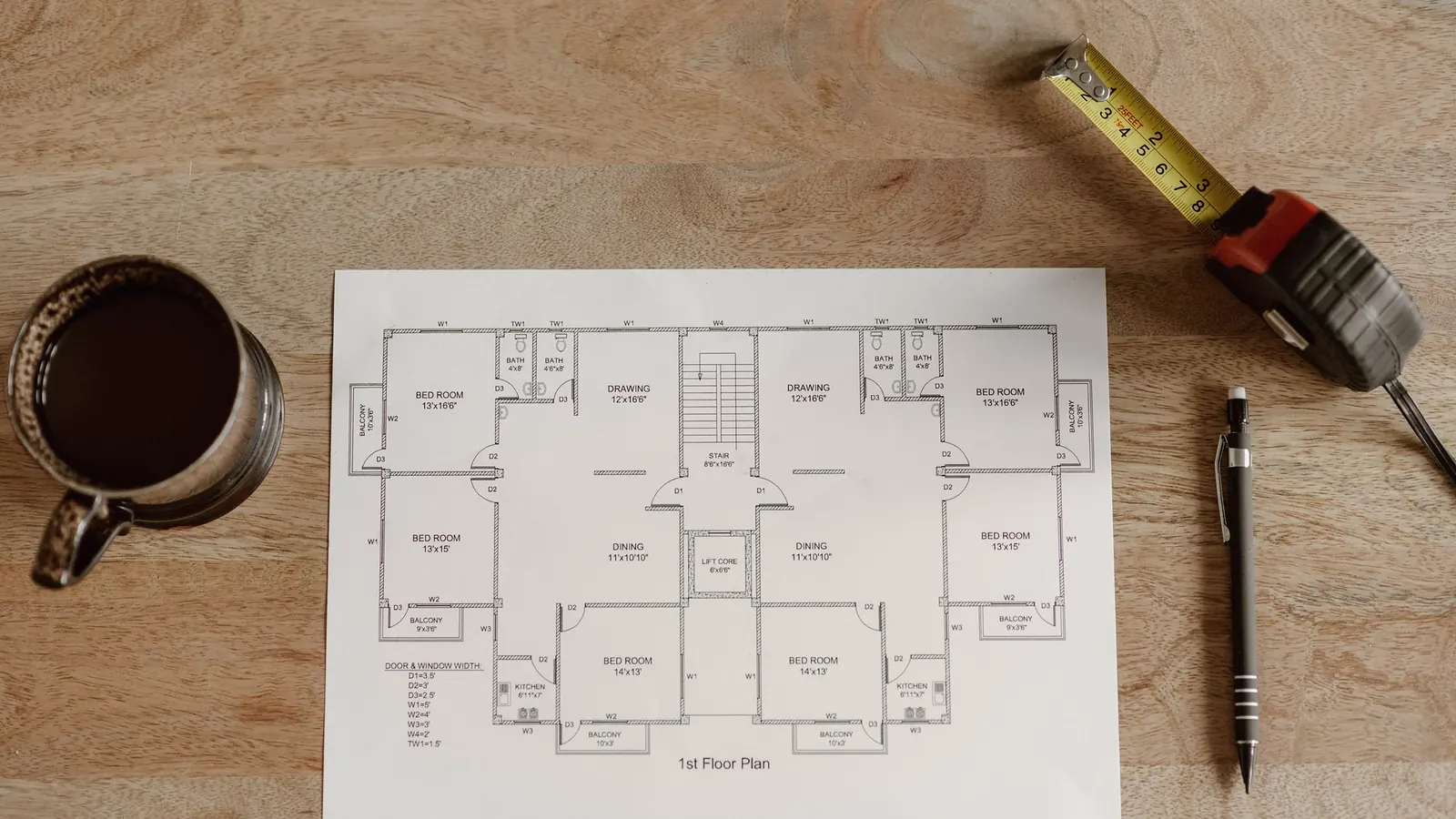
- Gather the property information. Floor plans, photographs of every wall, a short video walk through, the cadastral or ownership documents the studio needs, and rules of the building or housing community.
- Agree the scope in writing. Which rooms, which services, which deliverables, how many presentation rounds, and who handles construction.
- Set the rhythm. For example, one video review per week and written summaries after each call.
- Approve in stages. Concept first, then layout, then materials, then the detailed specification. Do not skip a stage.
- Confirm the local team. Name the contractor, the project coordinator and the person who receives deliveries.
- Follow the build with reports. Ask for dated photos and short notes on progress, issues and decisions needed.
- Do a handover check. Walk the property by video or in person and record any defects to fix.
For the renovation itself, our article on how to plan an apartment renovation explains the order of decisions.
What should the contract and the scope cover?
A written scope protects both sides. It should state:
- the services included and excluded, room by room
- the deliverables: layouts, visualisations, drawings, specification, shopping lists
- the number of presentation and revision rounds
- who supervises the site and how often
- who orders materials and furniture, and who pays suppliers
- how changes are priced and approved
- the schedule and what happens if a decision is late
- how payments are made and in which currency
- who owns the drawings and how they may be used
Ask for the scope to be written in a language you understand well, because misunderstandings about scope are among the most common sources of dispute. If the studio works in Spanish and you do not, request an English or Polish version and keep both copies.
How do you handle time zones, language and communication?
Spain and Poland share the same time zone in practice, which makes weekly calls easy. For owners in other regions, agree two fixed meeting windows. Choose one working language for documents. Use one shared folder for drawings and one list of open decisions, so that nothing is lost in message threads. After each call, ask for a short written summary with decisions and next steps.
Who manages the work on site?
This is the most important question in a remote project. The designer can draw a perfect plan, but someone must make sure the plaster, the tile and the joinery match it. There are three typical models:
- Designer plus separate contractor. You hire each side and manage the link between them.
- Design and build with one team. One company is responsible for both, and you have one point of contact.
- Designer supervises your chosen contractor. The studio visits the site and checks quality, while you manage payments.
For owners abroad, we generally find the second or third model less stressful, because responsibilities are clearer. Our guide to turnkey apartment finishing in Warsaw shows what a single team covers.
How do you deal with furniture and materials from Spain?
Spanish tiles, lighting, furniture and textiles can be ordered for homes in other European countries. Confirm lead times, who checks the order before it ships, how it is packed, who arranges transport and who signs for delivery. Order samples first. Ask whether items are in stock or made to order.
How are fees and payments usually organised?
Studios charge in different ways: a fixed fee per project or per room, a fee per stage, an hourly rate for consulting, or a percentage of the works. Ask which model is used and what triggers each payment. For a remote project, it is wise to link payments to delivered milestones, such as the concept, the technical drawings and the specification, so that you pay as you receive. Confirm the payment method and the currency in writing, and ask how invoices will be issued for the country where the property is located.
What risks should you plan for?
- Incomplete information. Wrong measurements cause costly changes. Verify key dimensions on site.
- Slow decisions. Delays often come from the owner side. Keep a decision list with dates.
- Unclear responsibility. Name one person for each task.
- Surprises in older buildings. Plan a survey and keep a contingency in the budget.
- Deliveries. Arrange storage and a person who can receive and inspect goods.
- Rules of the building. Check permitted working hours and any approvals.
What does a good remote working relationship feel like?
You should always know what happens next, who is doing it and when you are expected to decide. Presentations should be clear and visual. Questions should be answered within a reasonable time. Problems should be reported early with options, not hidden. If this does not happen in the first weeks, discuss it directly, because it rarely improves on its own.
How do you know the studio is the right fit?
Look at the quality of their questions in the first conversation. A good studio asks about the way you live, your schedule and your budget level before it shows any images. It explains the process, names who will work on your project and says what it needs from you. Ask to see how they present drawings and reports, and ask how they handle disagreement. Choose the team whose communication you trust, because that is what you will depend on for months.
Frequently asked questions
Do I need to visit the property during design?
Not always. A visit at the start and one at handover are ideal, but with good plans, photographs and a trusted local coordinator, much of the design can be done remotely.
Can I approve designs only through video calls?
Yes, if each call ends with a written summary and every approval is recorded. For larger decisions, ask for drawings and a specification you can review at your own pace.
Who pays suppliers and contractors?
This must be agreed in the scope. Some owners pay suppliers directly, others through the studio. Choose the model that gives clear invoices and a clear record of what has been ordered.
How long does a remote project take?
It depends on the size of the property and the scope. Design alone takes weeks, and building takes more. Ask the studio for a schedule with milestones, and plan extra time for deliveries.
How Kaster Group can help
If you live abroad and want to design or renovate a home in Spain or Poland, we can explain how a remote project is organised.
Kaster Group offers interior design and luxury renovation in Warsaw and Gdańsk, as well as in Madrid, Marbella and Tenerife, from the first sketch to the final styling.
The Spanish group behind Kaster has more than 10 years of experience in the real estate sector in Spain.
To talk about your project, write to info@kastergroup.eu or visit the Kaster Group studio page.
This article is general information, not legal or tax advice. Rules change; always confirm your situation with a notary, lawyer or tax adviser.