Buying a luxury apartment in Madrid: neighbourhoods, buildings and renovation potential
· 6 min read · ES · Polski · Українська
Madrid has become one of Europe’s most sought-after cities for buyers of high-end apartments – for living, for a second home or as a long-term investment. The most desirable properties are often in classic buildings from the late nineteenth and early twentieth centuries, with high ceilings, balconies and parquet floors, but many need a full renovation to meet today’s expectations. This guide covers where to look, what to check and how to evaluate renovation potential.
Key takeaways
- Each prime neighbourhood has a distinct character; visit at different times of day.
- Classic buildings offer proportions and charm; new buildings offer amenities and efficiency.
- Check the building’s condition, the community of owners and any heritage protection.
- Evaluate renovation potential before making an offer, not after.
- Use an independent lawyer and confirm all legal and tax points for your situation.
Prime neighbourhoods at a glance
Salamanca
Elegant streets, classic buildings, designer shopping and restaurants. It attracts strong interest from international buyers. Apartments are often large, with formal rooms and service areas that can be reorganised.
Chamberí and Almagro
Residential, refined and very “Madrileño”. Almagro, within Chamberí, is known for its stately buildings and quiet streets. Chamberí offers a strong neighbourhood life with markets and squares.
Justicia and Chueca
Central, lively and cultural, with a mix of restored palaces and smaller buildings. Ideal for buyers who want to walk everywhere.
Jerónimos and Retiro
Next to the Retiro park and the museums. A limited supply of classic buildings and a calm, prestigious atmosphere.
Beyond the centre
Areas such as El Viso, or residential developments in the north and west of the city and in nearby municipalities, offer houses, gardens and newer buildings with amenities.
In Madrid, the street matters as much as the neighbourhood. Light, noise and the building’s entrance can change everything.
Classic building or new development?
Classic buildings
- high ceilings, large windows, balconies and original details,
- often central locations,
- may need new installations, insulation, lifts or structural work,
- decisions about common parts are taken by the community of owners.
New or fully refurbished buildings
- modern installations, energy efficiency, parking and sometimes concierge, gym or pool,
- less renovation needed,
- often less character and smaller rooms.
What to check before buying
- Building condition – facade, roof, structure, lift, common installations. Ask whether major works are planned and how they will be financed by the community.
- Technical inspection – Madrid has a periodic building inspection system for older buildings; ask about the latest inspection and any required works.
- Heritage protection – some buildings have protection levels that limit changes to facades, layouts or original elements.
- Orientation and light – exterior apartments facing the street vs interior ones facing a courtyard.
- Noise – nightlife streets, traffic, neighbouring businesses.
- Legal status – land registry, debts, community fees and that the actual layout matches the registered one.

The buying process in brief
Buying in Spain usually involves obtaining a NIE (foreigner identification number), opening a Spanish bank account, due diligence by a lawyer, a private reservation or deposit contract, and signing the deed before a notary followed by registration in the land registry. Taxes depend on whether the property is new or resale and on your personal situation. The process is described in more detail in our guide to buying property in Marbella; most of it applies in Madrid too. Always confirm current legal and tax rules with an independent lawyer and tax adviser.
Evaluating renovation potential
The value of a classic apartment often lies in what it could become. Before making an offer, it is worth checking with an architect or renovation specialist:
- which walls can be moved and where the structural elements are,
- whether bathrooms and the kitchen can be relocated (drainage, risers),
- the condition of floors, ceilings and windows,
- what can be restored – parquet, mouldings, doors, ironwork,
- what the community and heritage rules allow,
- what licence or declaración responsable the works will require.
A realistic renovation plan helps you negotiate and avoid surprises. Our guide to luxury renovation in Madrid explains the phases and permits.
Designing a classic Madrid apartment
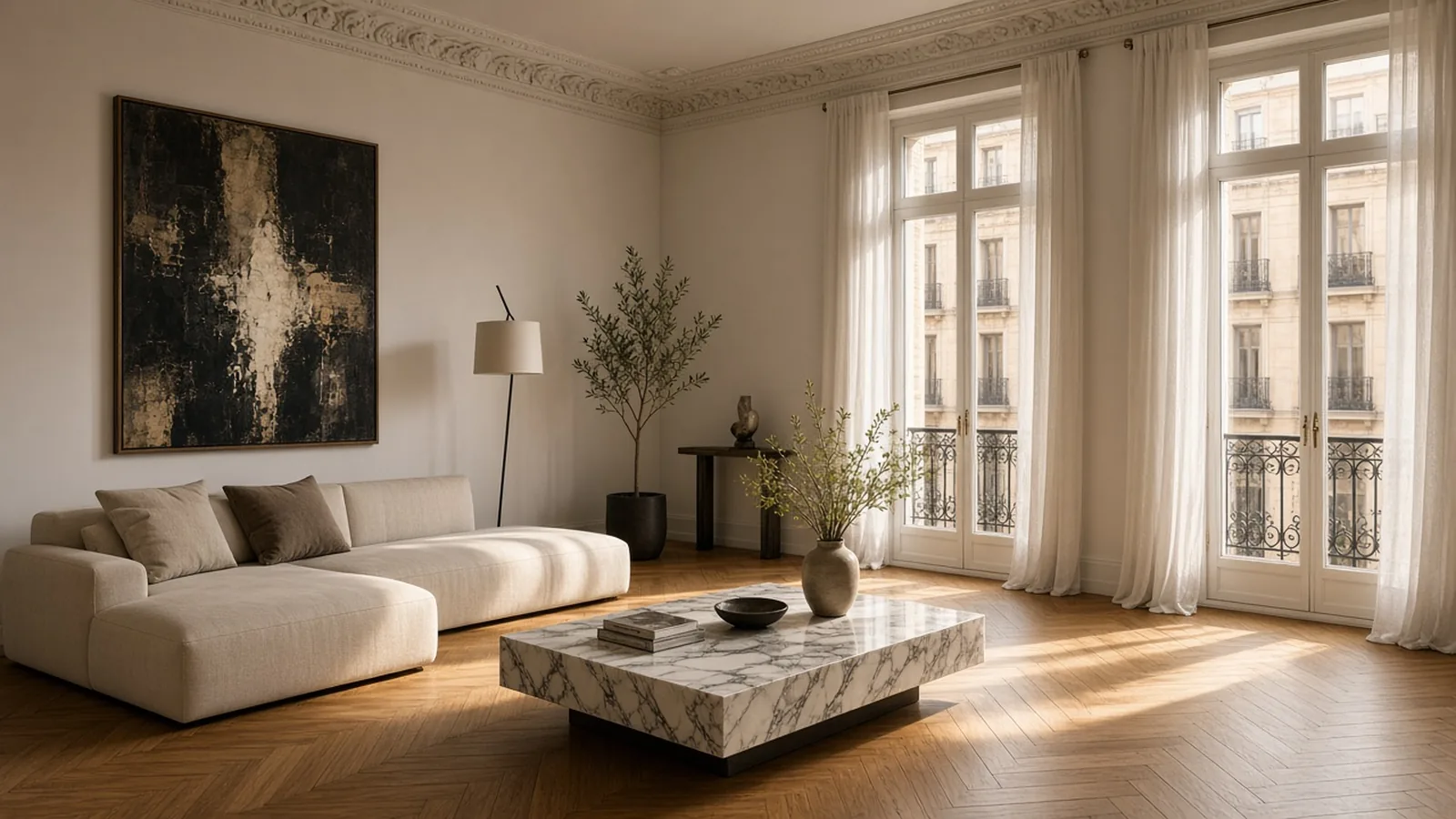
The best renovations respect the original architecture and add calm, contemporary comfort: restored herringbone parquet, lime-painted walls, a kitchen opened to the dining room where structure allows, discreet air conditioning, modern bathrooms in natural stone and joinery that hides storage and technology.
Buying from abroad
Many buyers in Madrid live elsewhere. A local team can view properties, coordinate technical inspections, prepare a renovation estimate and manage the works afterwards, while your lawyer handles the legal process.
Checklist before you start
Gather these points before the first meeting – they make every later decision faster:
- Your priorities: neighbourhood, light, size, building amenities,
- Visits at different times of day,
- The building’s latest technical inspection and planned works,
- Minutes of recent owners’ meetings,
- A first renovation assessment by an architect or specialist,
- An independent lawyer before any deposit.
Common mistakes to avoid
- Falling for the ceiling height only. Beautiful proportions do not compensate for a building that needs major structural or facade works funded by the owners.
- Skipping the community documents. Minutes of recent owners’ meetings often reveal planned works, disputes or extra levies.
- Underestimating noise. A balcony over a busy street can be charming on a Sunday and tiring on a Friday night.
- Assuming any layout is possible. Structural walls, risers and heritage protection can limit what you can change.
- Budgeting the purchase, not the renovation. In classic buildings, the renovation can be a substantial part of the total investment.
- Rushing the deposit. Sign a reservation or deposit agreement only after your lawyer has reviewed the property.
Bringing a renovation specialist to the second viewing is one of the simplest ways to avoid these mistakes.
Frequently asked questions
Which neighbourhood is best for a luxury apartment in Madrid? There is no single answer. Salamanca, Chamberí and Almagro, Justicia and Jerónimos are among the most sought-after, each with a different character. Visit at different times and walk the streets before deciding.
Can foreigners buy property in Spain? Generally yes; you will need a NIE and a Spanish bank account. Confirm the details of your situation with a lawyer.
Should I buy renovated or to renovate? Buying to renovate gives you control over quality and design, but requires time and a good team. Buying renovated is faster, but check the quality of the work carefully.
Can I change the layout of an apartment in a classic building? Often yes, within structural limits, community rules and any heritage protection. An architect should confirm this before you buy.
Do you help with property search? We support clients with property evaluation, renovation estimates, design and execution. Legal matters remain with your lawyer.
How we can help
Kaster Group supports buyers in Madrid with luxury real estate advice, renovation and interior design. Write to info@kastergroup.eu or message us on WhatsApp: +48 798 203 356.
This article is general information and is not legal or tax advice.