Bedroom Design: Sleep, Light and Storage
· 5 min read · Polski · ES · Українська
A restful bedroom depends on layout, light and storage more than on decoration. Place the bed away from direct drafts and noise, use blackout curtains with warm, dimmable lighting, keep the wardrobe and clutter out of sight and choose soft, matt materials in a calm palette.
Key takeaways
- Start with the position of the bed, the door and the window, then plan storage around them.
- Combine blackout curtains with warm, dimmable light at bed height for evening wind down.
- Hide storage and keep surfaces clear; visual calm supports rest.
- Choose soft, matt materials, natural textiles and a muted palette.
- Plan electrical points for both bedside tables, a reading light and a charging spot out of sight.
How should you plan the layout of a bedroom?
Begin with the bed. It is the largest item and the centre of the room, so its position decides how everything else works. Ideally the headboard stands against a solid wall, not under a window and not directly in line with the door. You should be able to see the door from the bed without it being the first thing in view when you walk in.
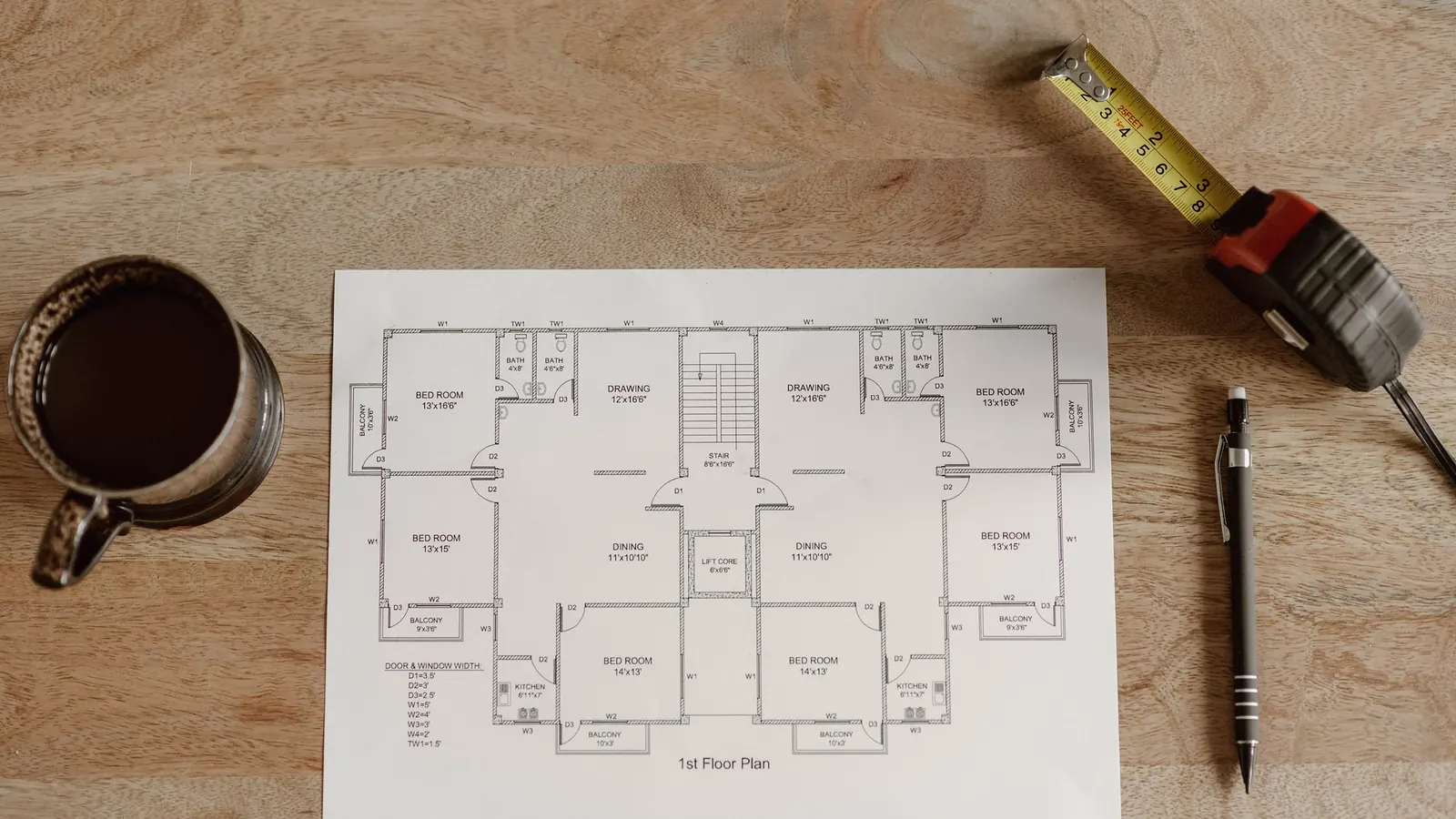
Leave enough space on both sides for easy access and for bedside tables. If the room is narrow, consider placing the bed in the centre of the short wall and using wall mounted lights instead of tables. Measure the door swing and the wardrobe doors before you finalise the plan, because a door that hits the bed will annoy you every day.
If space is limited, our guide to small apartment interior design offers layout ideas for bedrooms that also have to work as something else.
What light helps sleep?
Bedroom light has two jobs: darkness at night and gentle light in the evening and morning.
- Blackout. Use a blackout lining behind curtains, or roller blinds inside the window recess, so that street light does not enter the room.
- Warm light. Choose warm white bulbs in bedside lamps and wall lights. Avoid cold white light close to bedtime.
- Dimming. Dimmers on the main light and the bedside lamps allow a smooth change from daytime to evening.
- Low sources. Light at bed height feels calmer than one bright ceiling fitting.
- A night path. A very soft low light near the floor helps if you wake in the night.
Our article on lighting design for homes explains layers and placement in more detail.
How much storage does a bedroom need?
Storage is the main reason bedrooms look untidy. Plan it by listing what must live in the room: hanging clothes, folded items, shoes, bedding, suitcases and personal belongings. Then choose the form.
| Storage type | Good for | Planning note |
|---|---|---|
| Built in wardrobe | Making the most of the wall and ceiling height | Plan interior fittings, such as hanging rails and drawers, in the drawings |
| Freestanding wardrobe | Rented or changing spaces | Choose a height that reaches near the ceiling to avoid a dust gap |
| Bed with drawers | Bedding and seasonal items | Check the clearance for opening |
| Chest of drawers | Folded clothes and a surface for decor | Keep the top simple |
| Hidden niche or walk in | Larger rooms or apartments with a spare room | Needs ventilation and good light |
Which materials and colours work in a bedroom?
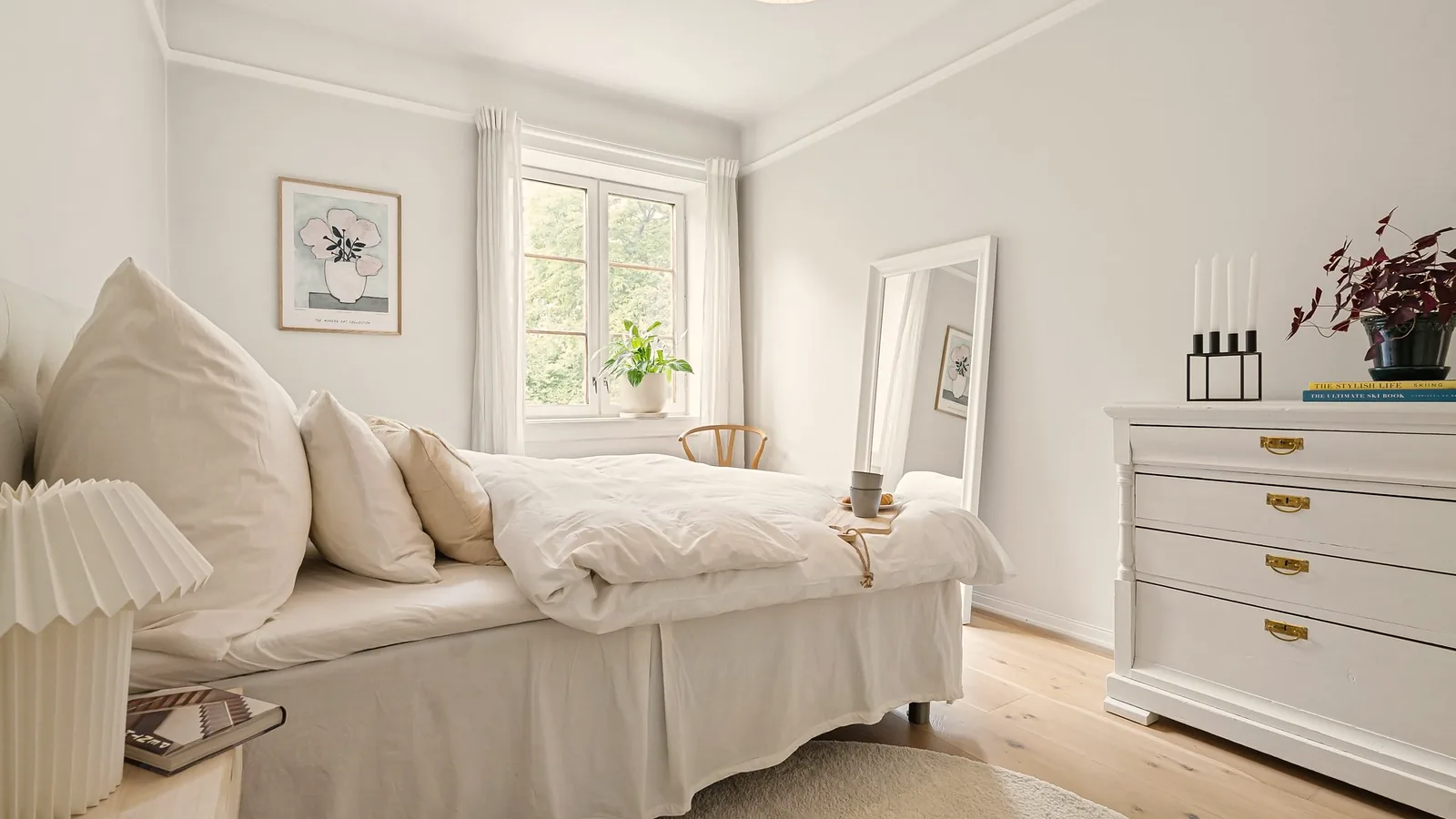
Soft and matt surfaces are better than glossy ones. Think of linen or cotton bedding, a wool rug, a timber floor or a quiet carpet beside the bed, and walls in a warm neutral or a muted tone. A single darker colour behind the bed can add depth without making the room feel heavy. Our guide to choosing a colour palette for your home explains how to test colours at different times of day.
Avoid strong patterns on every surface. A calm room usually has one or two textures that stand out and a limited number of colours.
What details make a bedroom feel complete?
- Bedside surfaces large enough for a lamp, a book and a glass.
- Curtains that reach the floor and hang from a rail fixed high on the wall.
- A mirror placed where it reflects light, not the bed.
- A comfortable chair for dressing, if there is space.
- One or two personal pieces such as a painting or a plant, rather than many small items.
- Good ventilation. A window that opens easily, and a plan for fresh air in winter.
How do you plan electrics and technology?
Think about where you will use each device. Plan two sockets at each bedside, one near the wardrobe for cleaning equipment, and a place to charge phones that is not on the pillow. If you want a reading light on each side, use wall lights with separate switches. Hide cables behind furniture or in a channel. Avoid placing a screen where it is the first thing you see from the bed.
What are the common bedroom mistakes?
- Placing the bed under a window with a strong draft or street light.
- Choosing curtains that are too short or do not block light.
- Leaving no clear surface because storage is too small.
- Using only one overhead light.
- Mixing too many patterns or bright colours.
- Forgetting access to the wardrobe or the window once the bed is placed.
Frequently asked questions
What is the best position for a bed?
Usually with the headboard against a solid wall, with space on both sides and a view of the door that does not put you directly in line with it. Avoid placing the head directly under a window if it is drafty or noisy.
Do I need blackout curtains in a bedroom?
If streetlights, early sun or neighbours’ lights enter the room, yes, they help many people sleep. A blackout lining behind decorative curtains gives good darkness and keeps a soft look in the daytime.
How can I make a small bedroom feel larger?
Use a simple palette, take storage up to the ceiling, choose a bed with drawers, mount lights on the wall instead of using bedside tables and keep surfaces clear of small objects.
How Kaster Group can help
If you want a bedroom that is calm, well lit and organised, we can design the layout, the lighting and the storage together.
Kaster Group offers interior design and luxury renovation in Warsaw and Gdańsk, as well as in Madrid, Marbella and Tenerife, from the first sketch to the final styling.
The Spanish group behind Kaster has more than 10 years of experience in the real estate sector in Spain.
To talk about your project, write to info@kastergroup.eu or visit the Kaster Group studio page.
This article is general information, not legal or tax advice. Rules change; always confirm your situation with a notary, lawyer or tax adviser.