Warsaw Neighbourhoods for Investors: A Qualitative Guide
· 6 min read · Polski · ES · Українська
Choosing a district in Warsaw is not a matter of finding “the best” one. It is about matching the character of an area with your strategy: a quiet home, a flat for a young professional, a renovation project in an older building or a place that will be easy to let. This guide describes several Warsaw districts qualitatively, without prices or yields, because those change and because any figure would be out of date quickly. Treat it as a map for your first conversations, then verify each building on its own.
How to think about a district
Before the names, a few questions that apply everywhere:
- Who is the likely tenant or buyer? Students, office workers, families and international professionals look for different things.
- How is the daily life organised? Transport, shops, schools, green areas and the walk to the metro or the tram matter more than a prestigious address.
- What type of building dominates? Pre-war tenements, post-war blocks and new towers behave differently in maintenance, charges and renovation potential.
- What is changing? New offices, infrastructure and regeneration projects can shift an area, but they take time and are not guaranteed.
Śródmieście: the centre
The central district contains the historical core, the main business streets and a mix of pre-war buildings, post-war housing and newer towers. Its attraction is that almost everything is within reach. Its challenges are noise, traffic and the fact that quality varies greatly between streets. Older buildings in the centre often offer high ceilings and character, and they also need a careful look at the community, the installations and any monument protection. For a renovation in such a building, see our article on renovating a tenement apartment in Warsaw.
Mokotów: residential and well connected
Mokotów is a large district south of the centre, with a mix of interwar and post-war housing, green spaces and a business area in one part of it. It is regarded as a practical residential choice for people who work in the offices of the south and want a calm home with city services close by. Different parts of the district have a different feel, so avoid generalisations and visit at different hours.
Żoliborz: green and quiet
Żoliborz, in the north, is known for its interwar housing estates, planned with green courtyards, and for a calm atmosphere close to the centre. Buyers who value a village-like feel inside the city tend to look here. The offer is limited and the buildings have their own rules, so check the technical state and any restrictions.
Wola: from industry to offices and towers
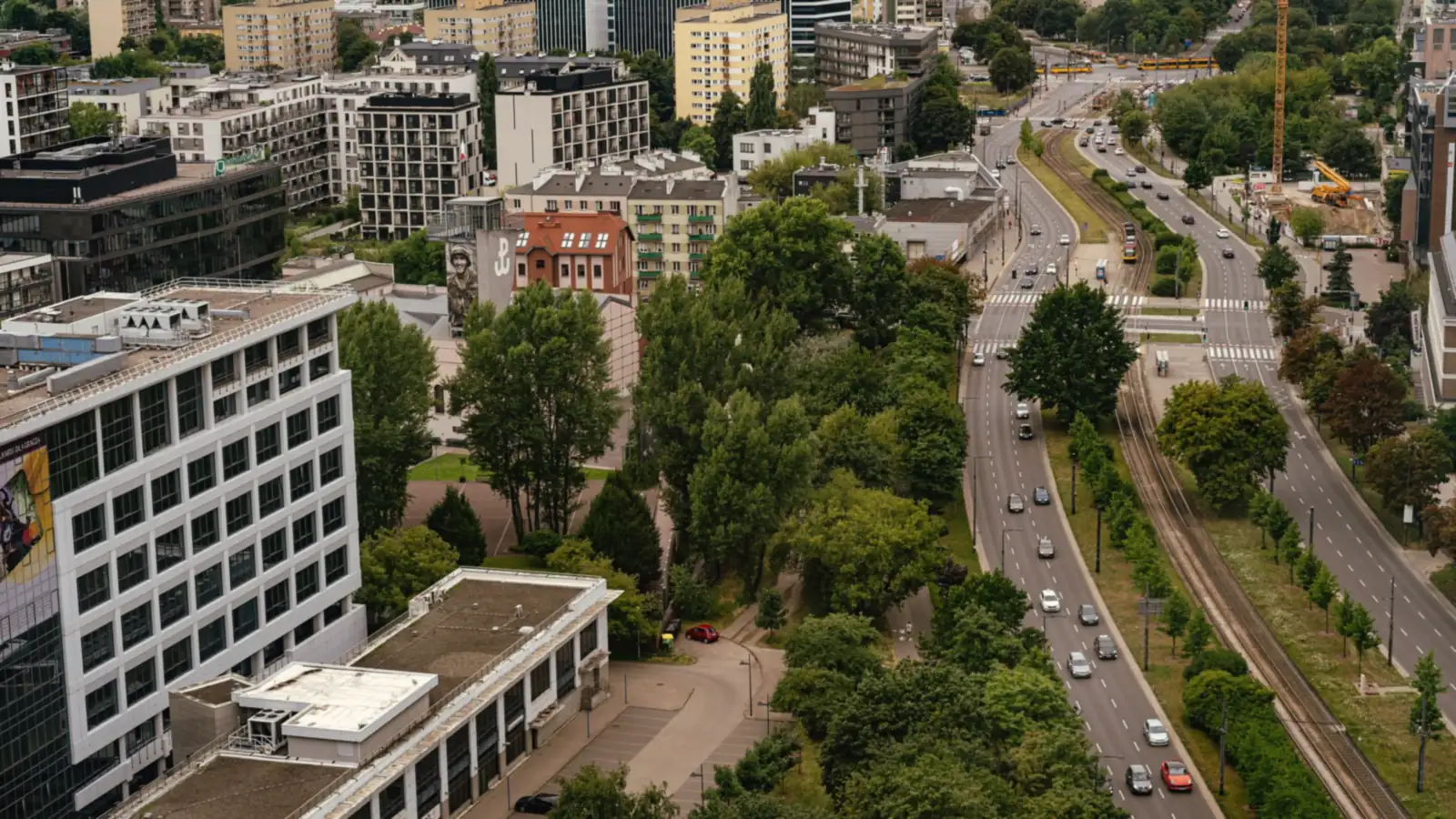
Wola, west of the centre, changed from an industrial district to an area with offices, towers and new residential projects. For buyers it offers a lot of modern stock, close to workplaces, and, in some pockets, the older buildings that remain. Think about construction around the building, since the area is still developing.
Powiśle and the river
Powiśle lies between the centre and the Vistula. It combines older buildings, newer developments and a lively cultural scene near the river. It is often a favourite for people who want to be central and close to the water, and the stock is varied, so each building needs its own check.
Praga: the east bank
Praga, on the other side of the river, is known for pre-war tenements that survived in a larger part than in many other districts, and for creative venues and regeneration. Part of the appeal is the character of the buildings. Part of the work is the condition of some of them, so a technical survey and a clear view of the community’s plans are important. Praga is a place where a renovation project can add a lot of value if it is planned and budgeted with discipline.
Saska Kępa: villas and modernism
On the east bank of the river, Saska Kępa is known for its interwar villas and modernist houses, tree-lined streets and a quiet, residential character. The market here is smaller and more discreet, and the homes tend to be individual, so selection takes time.
Ursynów and Wilanów: modern residential areas
Ursynów, in the south, is a planned residential district with large estates and green areas, connected by the metro. Wilanów, further south-east, is known for its palace and park and for new residential development, with a more recent building stock. Both attract families and buyers who prefer newer buildings, parking and a calmer environment than the centre.
Matching districts to strategies
| If you want | Look at | Keep in mind |
|---|---|---|
| Character and a project | Older parts of Śródmieście, Praga | Technical state, community, monument rules |
| A quiet family home | Żoliborz, Ursynów, parts of Mokotów | Limited supply in some areas |
| A modern, low-maintenance flat | Wola, Wilanów, newer estates | Surroundings under construction, developer standard finishes |
| Proximity to the river and culture | Powiśle, Saska Kępa | Varied stock, individual checks |
How to compare two apartments in two districts
- Visit both at different times of the day, including an evening.
- Walk from the door to the metro, the shops and a park, and note how long it takes.
- Ask the community administrator about charges, debts and planned repairs.
- Think about the finishing: a modest apartment in a good building can be raised to a high standard through design and renovation. Our article on choosing an interior designer in Warsaw explains how that process works.
- Check the legal points in our guide to investing in Warsaw real estate as a European.
Frequently asked questions
Which Warsaw district is best for investment?
There is no single answer. It depends on your strategy, your budget and the tenant you want. A central flat, a family home in a residential district and a renovation project in an older building are three different investments.
Are prices the same across the district?
No. Within one district, the street, the building, the floor and the condition can matter more than the name. Always judge the building on its own.
Should I buy in a district that is still developing?
It can offer opportunity, but it also carries uncertainty about timing and about how the area will look when the construction ends. Be realistic and avoid counting on improvements that are not yet confirmed.
How Kaster Group can help
Kaster Group works from Warsaw with buyers from Europe and helps to compare districts and buildings, coordinate the purchase with a notary and a lawyer and, when needed, design and renovate the apartment with one team. The Spanish group behind Kaster has more than 10 years of experience in the real estate sector in Spain.
If you already own an apartment in one of these districts and want a first reference for its market range, ask for a free indicative valuation. It is an estimate, not a formal appraisal.
This article is general information, not legal or tax advice. Rules change; always confirm your situation with a notary, lawyer or tax adviser.